
LIVING THE BRAND: Operationalising Modern Luxury Brands
Feature by FerebeeLane

Image: Blackberry Farm
Decades ago, my university ethics professor shared a short maxim he would repeat throughout the semester. Simple but profound, I still think about his words all these years later.
“True convictions,” he said, “are expressed in the doing, not the saying.”
Those words came to mind recently as a hospitality client shared her challenges with luxury branding. She said she could tap any number of firms to create pleasant identities and serviceable strategies, but she could only rely on a few to help bring them to life — to help humanize and operationalize them in meaningful, scalable ways. (I was relieved to hear our agency fell into the smaller second group).
She’s not the first to call out this issue, of course. Today’s luxury marketers may be more sophisticated than ever before, and they may even be in higher demand as affluent appetites evolve, but how much of this work is being truly and fully activated in the real world? How many modern practitioners are approaching ‘luxury branding’ as a deliverable (a document, a deck or even a rousing launch video) rather than a hardworking narrative framework that genuinely aligns and inspires an entire organization?
This is the crux of my frustrated client’s question — and the rationale for deep and enduring brand operationalization. It’s also, undoubtedly, a contributing factor in today’s changing contemporary luxury landscape. McKinsey’s recent State of Luxury study tracked how high-growth brands weakened their core value proposition as they grew over the last ten years. While focusing on raising prices, increasing distribution and manipulating attention through creative maneuvers instead of real creativity, many failed to deliver on the story, sensibilities and quality that their premium prices promised. The results are now reverberating through the industry.
Bain and Altagamma reported late last year that the global luxury consumer base has contracted almost 17%, from approximately 400 million in 2022 to 340 million today. Now millions fewer of these high-net-worth individuals are actively seeking out and spending on luxury brands, in large part because they don’t feel as connected to those tastemakers and category standard bearers. Bain partner Federica Levato boils the problem down to an alarming feeling: she contends that these disenfranchised affluents feel ‘betrayed’ by the brands they once loved.
Feelings and connections — the currency of comprehensively operationalized and humanized branding — are the key to stabilizing many luxury brands’ footing. Their fix won’t be found in precious new planning decks that are surely being drafted in the wake of all the unsettling McKinsey and Bain data about our category.
That’s not to say plans and strategies aren’t essential; they absolutely are. Intelligence, disruptive insights and bold creativity will always be a critical piece in the luxury branding puzzle. But that thinking only really works when, as my professor said long ago, it materializes as doing. When it’s brought to life and activated across every touchpoint, by every member of an organization. When the brand depicted in strategy decks actually manifests as a meaningful expression of compelling, fundamental truths.
This is the powerful territory not of traditional marketing and paid advertising, but of brand operationalization: the disciplined, imaginative work of infusing brand sensibilities into every detail and decision. The result is clarity across an organization, and coherence in every experience and interaction. Each moment, a chance to connect with customers and guests. Each element, an opportunity to signal and affirm feelings that foster resonance — and overcome feelings like disappointment and betrayal.
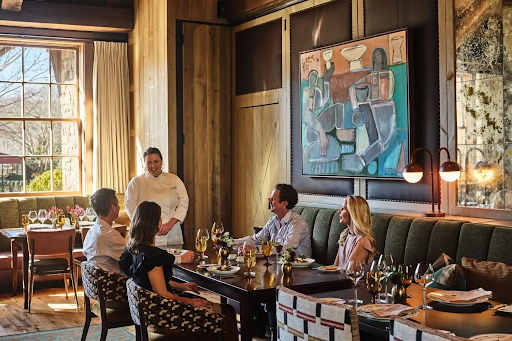
Image: Blackberry Farm
Our longtime client Blackberry Farm demonstrates how powerful this sort of operational brand thinking can be when committed to across an organisation. One of the United States’ most acclaimed Relais & Châteaux resorts, Blackberry has been animating and activating their elevated country estate story for decades. In every decision, in all guest interactions, they draw on bedrock brand truths that bind their expansive farm setting with the refined-meets-relaxed spirit of authentic southern hospitality.
The result is a chorus of touchpoints that are continually evolving but perennially cohesive. When an annual calendar of seasonal events was launched, it was christened with a folksy, farm-inspired moniker: The Almanac. A new spa was was conceived with a distinctly pastoral name and identity, The WellHouse. The property’s bespoke Bernardaud tableware? It’s embellished with sketched turnips, roosters and the brand’s iconic fenceline. Everywhere a guest turns, the brand comes to life in authentic, seemingly effortless ways. From the humble language used to greet guests to the signature favorites on the menu to the thoughtful way inevitable issues are addressed, the empowered team leans into — and lives out — Blackberry’s warm, welcoming farm ethos.
Blackberry’s deep brand clarity isn’t a study in rote consistency, it’s a masterclass in brand story being applied at scale. It’s a kind of harmony that builds resonates deeply, internally and externally, culminating in a feeling dubbed by friends and fans as a ‘Blackberry state of mind.’
FROM ROLL OUT TO RESONANCE
5 ways to bring modern luxury brands to life
Activating a luxury brand in the same comprehensive ways as Blackberry Farm is as much about culture-building and organizational buy-in as it is about strategy and marketing systems. The five ideas below — distilled from years of work with Blackberry and premium brands across a range of categories — offer a starting point for anyone ready to regain traction with luxury audiences and connect in more dimensional, meaningful ways.
1. Reframe the brand as a decision-making tool.
A brand only becomes useful when it shapes daily decisions — reflexively, at every level of the organisation. The fundamental truths behind a brand aren’t statements to be memorised. They’re a lens through which every choice, from the largest strategic pivot to the smallest service detail, can be evaluated and expressed.
2. Focus on brand signals as much as brand statements.
Guests don’t interact with a brand strategy. They intuit signals — the texture of a welcome letter, the name above a door, the timing of an arrival ritual. Each signal either reinforces the brand’s truth or quietly contradicts and degrades it.
3. Leverage the power of brand-driven naming.
Nomenclature is one of the most underused instruments when materialising a brand. From retail spaces to products to resort ballrooms and loyalty programs — names manifest the brand’s sensibility in a single word, contributing to a cohesive universe of meaning.
4. Invite the entire organisation to be the brand.
The most durable brands are built by people who don’t just understand them — they live them. That kind of organisational commitment isn’t achieved through a one-time orientation or training, it requires continuous repetition and reinforcement.
5. Measure what matters — and what moves people.
Operationalisation without accountability drifts. The brands that sustain resonance over time are the ones that track not just the metrics of reach and revenue, but the softer indicators of felt experience and perception of a brand’s story and sensibilities.
—
Years from now, the brands that hold and gain ground in this era of evolving luxury, who chart a contrasting path to the somber reports from McKinsey and Bain, won't attribute their success to a particular campaign, to a trendy collab or to a timely or clever repositioning. They'll point to the quieter, harder, longer work — the culture they built, the signals they refined, and the deliberate actions they took to constantly breathe life into all facets of their brand.
FerebeeLane is a brand strategy and creative agency that works with premium and luxury brands to engage the discerning affluent consumer. For the past 20 years, the agency has collaborated with beloved brands such as Le Creuset, Blackberry Farm, Miele, The Ritz-Carlton, Baker McGuire Furniture, Vail Resorts, Chimay Trappist Beer, as well as numerous other Relais & Châteaux properties, and other luxury brands throughout the home. To learn more about FerebeeLane or our perspective on the discerning affluent consumer please contact Josh at josh.lane@ferebeelane.com